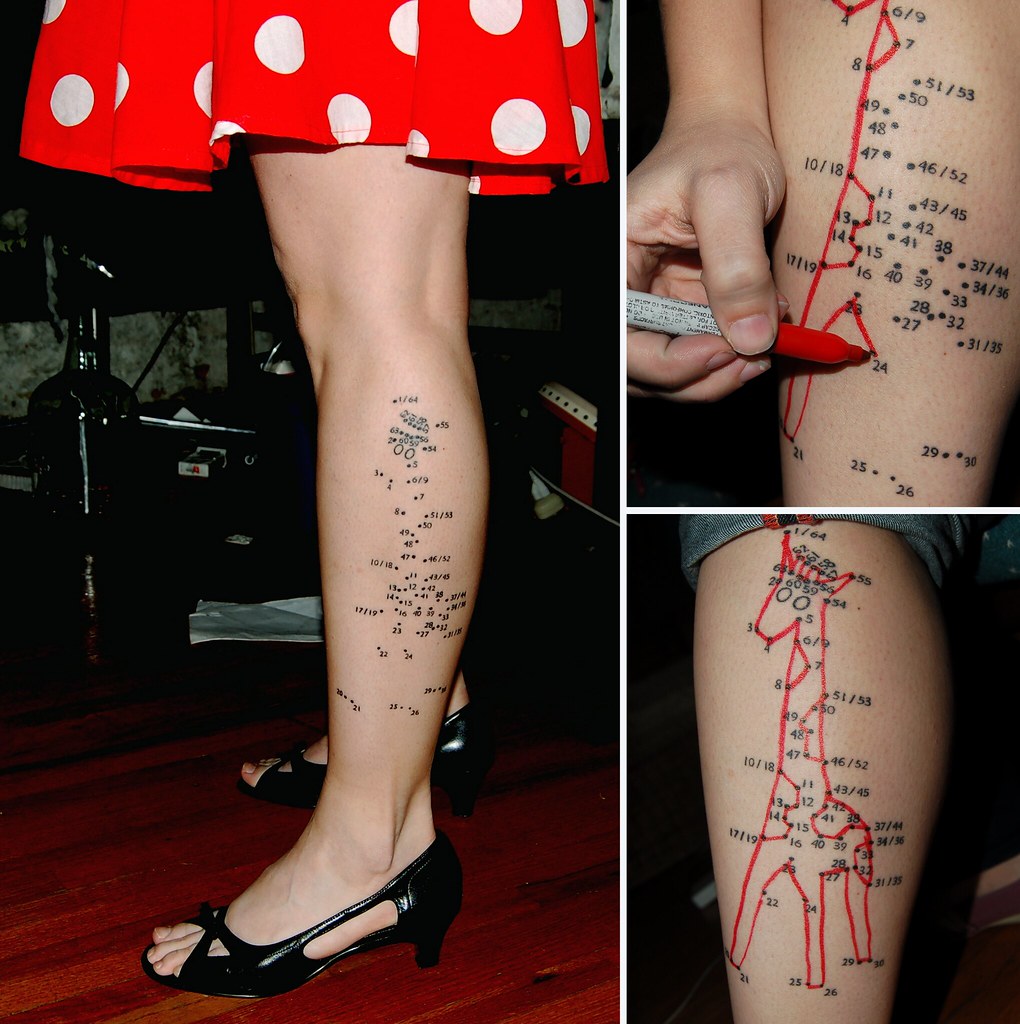
Before I nap:
Cool. Oddly enough, this has a last.fm entry as well.

And because Halloween is around the corner, halfway around the world:
From across the globe to your frontal lobe
7. Have you ever noticed how sun-dried tomatoes and top-grade peyote look exactly the same? Not a suggestion, really. Just saying.Yes, I understand the somewhat heavy-handed and ham-fisted promotion of the New Yorker here. But what can I say, they publish some good shit.
14. Hepatitis! (Note: This is not technically an appetizer.)
The box of Big Rigs states that the player may "race trucks across the country, with cops chasing [them]." GameSpot's Alex Navarro wrote that this description of the game is nothing more than "horrible, horrible lies", since there are no police in the game. Additionally, they pointed out, the computer-controlled opponent vehicles have no AI and never move from the starting position, making even the description of the gameplay as a "race" questionable.I mean, who actually goes to the trouble of coding all that, and releasing and distribution? Is it even a game as such? I mean, a game involves challenges and obstacles and some process of achievement, and it's arguable that this game achieves even the bare minimum of that. It seems more like some self-reflexive, postmodern exercise in minimalism/lying. The Gamefaqs review page and board on the game is also highly amusing as well.


This is what happens when evolution isn't smart, which is always. Unlike the hand of the one true Lord, FSM.
I'm more or less convinced that whatever is recorded in human history is more or less long strings of paredolia and apophenia, with some postdiction thrown in there for 'good' measure. Which brings me to my main point:
Michael Drosnin is a douchebag.
I've just bumped up the pagerank (albeit infinitesimally) for his wiki article for the keyword 'douchebag', though they are many a candidate competing for that position.
Don't read too much into this; I may do an expanded post more fully exploring the implications of this. But this is food for thought, so to speak:
If I could loan out my physical books without giving up possession of them, I would. The fact that I can do so with digital files is not a bug, it's a feature, and a damned fine one. It's embarrassing to see all these writers and musicians and artists bemoaning the fact that art just got this wicked new feature: the ability to be shared without losing access to it in the first place. It's like watching restaurant owners crying down their shirts about the new free lunch machine that's feeding the world's starving people because it'll force them to reconsider their business-models. Yes, that's gonna be tricky, but let's not lose sight of the main attraction: free lunches!
Universal access to human knowledge is in our grasp, for the first time in the history of the world. This is not a bad thing.
AN INTERESTING HYPOTHESIS ABOUT A WOMAN, THE PRESIDENCY AND LAME DUCKS
There's been a lot of brouhaha about the choice of Palin as VP nominee on the Republican ticket, and atleast some of this comes from concerns surrouding McCains' health. In addition to his somewhat 'statured' age (72), his tortuous and brutal treatment at the Hanoi Hilton (he can't lift his arms above his head; all those victory-cheer shots of him lifting his hands above head are done by his wife holding his hand and raising them for him) McCain has had a history of melanomal skin cancer, and in 2000 underwent an operation for that condition that left a noticeable mark on his face.
All of this plays into the secret hope that McCain could shuffle off his mortal coil sometime during the next four years; or at the very least, have a recurrence of cancer or something serious enough to warrant the 'abdication' of his presidency. Schadenfreude has broken out.
However, even if mooseburger lady were to come into the top job at the Oval Office, she would have a tough time at the post. Simply put, she'd be a lame duck. She would have absolutely no credibility, and possibly even less power. The Dems will most likely control atleast one, if not both houses of Congress, and won't listen to her; and the Republicans (at the best of times) haven't been a women-friendly party.
Unless we have some kind of October surprise where Palin bares her teeth and proves that she could use bully pulpit (emphasis 'bully') of the presidency, it's probably safe to say her (theoretical) presidency would likely be a deadlocked one.
McCain picks his VP. Incredibly good political move.
Plus, she's a VPILF to boot.
Also, i'm writing this down and checkin' it twice, as to make a record; if McCain does infact win the election, you have to join Facebook. You know who.
That joke may very well make up for the Facebook.
I love student life. Sitting on homely couches at Stucco (this beautiful, gorgeous, amazing place in the middle of Newtown, with lovely doors and bohemian perfection) working out policy points, tuning lecture bashes, screen printing shirts; this is what it's about. Spending time with possibly the largest group of incredibly funny, smart, talented, dedicated people i'm ever going to meet in one place, wearing bear masks and getting paint everywhere. I'm tired. I'm exhausted incredibly, from going from one wonderful party to helping out PULP, hungover and 5 hours of sleeping on the floor.
I want to feel like this forever.

See? The Internet is more than just a channel for the faster delivery of pornography and gossip! It can also deliver funny cat pictures!! LOLZ
P.S. Never actually do this to a cat. That would be horrifying, and hasn't Gotham got enough supervillains as it is?
Oh Brfxxccxxmnpcccclllmmnprxvclmnckssqlbb11116: Reasons why people and children do not mix, and should never be allowed to happen. More to the point, parents using pataphysics would be a terrible name for a 'rock band'.
Not what you're thinking
Joss Whedon new project!! Go watch now, because it's gone after 20th midnight of this month. Read the master plan too.
Also amusing: ads from the 30s. The last one is super great, especially if you enjoy fancy calligraphy/promiscuity/'being everyone's pal'.
Standing on the shoulders of giants, I prefer to call it. Or atleast crouching at their knees.
Exceeding moment of hilarity! Ran across this video today. While the advertisement itself isn't particularly great (it's about beer and soccer and cross-dressing or some such crap), the comments are priceless:
Headcrabb (4 hours ago)
What the hell do you mean fake?
Its not a real commercial?
Bittermanscolon (7 hours ago)
of course it's fake, it's a COMMERCIAL! Fuck sakes.
manupdude1 (7 hours ago)
fake
Quick addendum:
I'm going to talk today about dragons in garages.
In Carl Sagan's book The Demon-Haunted World, he opens with a passage about a dragon in his garage. Obviously, you're intrigued. He shows you his garage, but you see no dragon. Of course not, he replies, because the dragon is invisible. You try to touch the dragon, but that's no use, as Sagan says the dragon is incorporeal. You try to smell it, but no odour. This process continues so on and so forth, until you exhaust all your possible attempts to prove the existence of this dragon in some way.
This leads on to a wonderful quote by Sagan:
Now, what's the difference between an invisible, incorporeal, floating dragon who spits heatless fire and no dragon at all?
Rightly, he concludes, there isn't.
However, sometimes, there is a dragon in the garage. Newton had one such famous dragon: gravity. He could 'see' it; he could percieve its existence, and had to come up with a new mode of understanding (calculus) to prove it.
Sometimes, some people's dragons are interesting purely for their imaginative quality. The New Yorker is running a review of a retrospective exhibition held in New York on the life and times of Buckminster Fuller. Fuller was either a eccentric visionary or complete madman; "Fuller’s schemes often had the hallucinatory quality associated with science fiction (or mental hospitals)."
Fuller was a strange, fantastic figure, who invented the idea of using geodesic domes as houses and gave eight hour lectures on everything, from environmentalism to architecture. Quote:
"instead of finding a job, [BF] took to spending his days in the library, reading Gandhi and Leonardo."
We need more people like this. I'm not saying that it would be a good thing if everyone were like this, but we do need more dream sellers.
If nothing else, they make the world less boring.
I think that's what I want to be. Penny for a dream?
This post cribbed and crafted from here, here, here, here, here, here, here, and here.
Repressed gays on the Supreme Court?! Say it isn't so!
That one comes from awesome Harry Andrew Blackmun, who also authored the majority opinion on Roe v. Wade. Another great opinion to read, if you have the time. Actually, the Roe v. Wade opinion is one of the nicer legal decisions i've read, managing a surprisingly nimble balance between women's rights and public outcry. Mind you, it's a long opinion, which is somewhat expected I guess.

For all you sexy chemists out there:
Periodic Tables don't come much sexier.
Legal trouble, again. Actual, blood-boiling style outrage.
About fucking time. Seriously, this sort of bullshit has gone on for too long. 6 years?! Christ. What's even more appalling is the umitigated douchery of Scalia's dissenting opinion:
Of the two dissenting opinions, Justice Antonin Scalia’s was the more apocalyptic, predicting “devastating” and “disastrous consequences” from the decision. “It will almost certainly cause more Americans to be killed,” he said. “The nation will live to regret what the court has done today.” He said the decision was based not on principle, “but rather an inflated notion of judicial supremacy.”
Yes. Habeus Corpus. A quaint, inflated notion of judicial supremacy. How these people get into power still baffles/saddens me.
That one was easy, if late. Now, in general, the RIAA are dicks, and their lawyers more so. But this...this is a new standard.
To summarise: The RIAA filed a 'making available' suit against Cassin, when said defendant filed a motion to dismiss aforementioned suit. Just before the judge made that ruling however, the RIAA submitted a voluntary notice of dismissal on the suit, and it was over. Or so we thought.
The bastards then resubmitted the suit, only they renamed the defendants to 'Does 1-4' (in legal terms, John Doe is a placeholder name for defendants who are either unknown or anonymous). In addition, the fuckers filed another motion for ex parte discovery!
To say that this is a gross violation of legal principles would be, frankly, an understatement. One needs Jon Stewartesque style to adequately convey the sheer gall and principled evil of these people.
But RAD. I especially like the fact that some-bodys went to the trouble of dressing up as the Imperial Royal Guard.Stop all this "organic" and "natural" treehuggery. Because that's all it is. Well, that and money grubbing on the part of the people selling you that overpriced stuff.
"Organic" means almost nothing in the USA thanks to the influence of the USDA, and "Natural" means less than nothing.
However, you are sadly mistaken about the basic realities of farming..."Organic" and "natural" crops cannot even remotely compete in terms of volume of perfectly safe, edible food with the genetically modified, pest free varieties.
The following things are true:
1. A hundred years ago, there was no such thing as agriculture which was not "organic", because we did not turn petroleum into fertilizer or, for that matter, pesticide.
2. The use of shallow tilling of soil, especially when done with heavy machinery, creates hardpan.
3. The use of petroleum-based pesticides and fertilizers (as well as other artificially-sourced pesticides etc) harms soil diversity. Good soil is over 60% organic material (ideally, over 80%!) and can be 20% or more living matter. The chemicals with which you are so enamored harm beneficial insects, the worms which we depend on to create soil (they are also defeated by our tilling practices) as well as nematodes and mycelium.
Enough facts, I don't want to confuse anyone with them. Let's get back to the battle. Again, a hundred years ago it was all "organic" farming. Therefore "organic" itself doesn't mean a whole lot. If you're fertilizing only with poop and the like you can still be horribly harmful to the environment by simply allowing topsoil to wash into rivers. Or, for that matter, by tilling it and leaving it uncovered, which allows it not just to wash away, but even to blow away. This results in harm to air quality and thus to our ability to breathe - living in agricultural areas is no fun. I am living in Lake Country now; I was living in Marysville last. Here it's vineyards, and you can find them south (Napa) or west (Hopland) where various items are sprayed on the plants - and into the air, where we get to breathe them. That shit sets off my asthma every time, so I really don't want to hear about how "safe" your inorganic farming is.
Now, let us discuss the issue of sustainability in more depth. "organic farming is mining the soil of its vital minerals, particularly phosphorus and potassium. ... Conventional farming, on the other hand, restores mineral balances through fertilization." This is amazingly empty-headed cheerleading bullshit. In fact, organic farming restores mineral balances through fertilization, but in conventional farming techniques (those of the so-called "Green Revolution") instead of correctly amending the soil with those things which it requires, and allowing natural forces to fix those nutrients and make them available to your crops (these "natural forces" are also called "other plants" or, by the ignorant, "weeds") we spray ready sources of the food into the soil and feed the plants. Feeding the soil is a basic tenet of true (i.e. nothing to do with the USDA) organic gardening, but I understand that there is always a temptation to simply ignore facts in the pursuit of a good argument.
It just so happens that in my yard there is an organic garden which produces food crops at an extremely economical rate. It is based on compost, poop (steer, llama, seabird, bat, and chicken shit) and the usual range of organic soil amendments including alfalfa meal, blood meal, bone meal, feather meal, seaweed meal and so on. Those with an eye for detail will note that much of this is actually recycled refuse from animal processing and the like - I'm no space cadet from Vega. The soil is better this year than it was the year before - it's been obvious for months because the cover crop (mustard) was about four times taller this year in spite of similar (if anything, less ideal) conditions otherwise.
Now, let me address the issue of food quality. In theory, commercial farming methods can safely produce food of the same quality as organic methods, or even superior quality. In actuality, this almost never happens. First of all, the pesticides are unequivocally not safe for you (I don't know what makes you think that the food is safe, when it has repeatedly been shown to not be so - some of the pesticides don't wash off conveniently and we even have special vegetable washing products for this purpose now - the global "We" you understand, because I produce my own produce and otherwise general buy organic) and honestly, you should never spray anything on your plants that you wouldn't at least spray on your own body, if not something that you wouldn't mind putting in it. Common sense here. While the food for the plants is taken apart one molecule at a time and put back together the way mother nature intended regardless of if it comes from poop or from oil, the pesticides don't get the same treatment.
The next factor negatively affecting food quality is the process with which these products are shipped to the store. It affects every stage of the plant's existence from its very selection - the varieties of food available on the shelf at your local supermarket are based more or less entirely on appearance and ability to travel. Food is picked early, gassed to force "ripening" (as if it were ripe after that) and then shipped hundreds of miles to the store. Consequently, not only does organic food generally taste better simply because it's a superior variety, but also because organic farming is usually carried out on a smaller scale, with the product being used closer to the point of production. Far from being a "throwback", this makes good economic sense and you can see the principle at work all over the world; in fact, China is going to have cars built in Mexico to sell to the American market in spite of the fact that American companies have things built in China to sell to the American market because it's cheaper than having them built in Mexico. Welcome to our world. Because the food does not have to travel so far, it can be picked at an actual state of ripeness, when the parts of the plant which we eat are fully developed, and thus the macronutrients are fully developed. Genuinely ripened products are always substantially richer in the things which are interesting to us; things with antioxidants have more of them, things with beneficial complex amino acids have more of them, et cetera.Shocking to discover that fertilizer and pesticides yield more crops.
Food is rotting in silos all over the world (except maybe for Africa - wait, it's rotting in warehouses!) which should clearly make the point that the reason people are starving in this world has nothing to do with adequate supplies of food being available on the planet, but with them being available locally. Right now Mexicans are going hungry because our demand for subsidized ethanol fuel has increased the demand and thus the price for corn. The issue with people starving on this planet has nothing whatsoever to do with the amount of food available, and everything to do with greed. It is really just that simple.
NOW, where do we go from here? How do we correct the downward spiral that is destroying the soil all over this planet?
The first step is to stop throwing away valuable poop. In this country almost all sewage is pumped (at great expense) to sewage treatment plants where it is processed (at further great expense) and then generally put right back into some water system that someone will be drinking out of later. Then we later pump that water out of the stream, spend huge amounts of money to clean it up so that we can drink it or take a crap in it and flush it towards the treatment plant. The solid waste (lovely euphemism) left over from this process is usually either burned or landfilled. Or burned and then landfilled.
Instead of doing this, we need to recycle this human waste and feed the plants. You don't just pump the shit out into the fields, that's a recipe for E.Coli sprouts. You do have to process it slightly, but there are actually a number of methods to do this which involve very low (or basically zero) energy input aside from the crap, and which not only produce fertilizer but also methane gas. The methane gas can be used onsite for cooking, or compressed and taken offsite. It can be used pretty much anywhere we normally use propane or "natural gas". Most sewage plants actually just "flare off" or simply burn this methane, putting the CO2 right back into the atmosphere without any gain. And we pay them for the privilege of having our shit processed in the most inane way possible.
Of course, a lot of basic assumptions about the way people should live have to be revised - we have to reconsider location, location, and location. Or we can still spend a lot of money to pump the shit, but instead of pumping it to a treatment plant, we pump it to what amounts to an array of wildlife refuges with submerged plastic tents which capture methane. The shit is pumped into the bottom with a supply of water, and bacteria process it and heavy metals settle out and are fixed by other bacteria. The process produces algae which can be used to make biodiesel and alcohol fuels, and methane which I have already discussed. The only reason we're not doing this today is the very same reason that there is so much resistance against organic farming - in order to protect the profits of oil barons and their vassals, who are making big metric fuckloads of money by shitting on the planet and taking our money unnecessarily.
If you would like clarification of any of these points, or any further explanation of why organic farming is absolutely essential and why modern mass agriculture is destroying the planet, I will be happy to provide you with more information.
D323643 is the least dissimilar to the Tartan connector of any of the patents, and stands as an obstacle to any claim of infringement of the others because it establishes prior art; if its scope, like the others, is granted the breadth you argue for, then the Tartan connector falls plainly under the prior art and cannot constitute an infringement of the later, and more dissimilar, patents. Read the patents narrowly, and Monster loses; read them broadly, and Monster loses. You are welcome to point out any error in my reasoning; but I have to say that I will be unreservedly surprised if you are successful in doing so.
It may be that my inability to see the pragmatic value of settling frivolous claims is a deep character flaw, and I am sure a few of the insurance carriers for whom I have done work have seen it that way; but it is how I have done business for the last quarter-century and you are not going to change my mind. If you sue me, the case will go to judgment, and I will hold the court's attention upon the merits of your claims--or, to speak more precisely, the absence of merit from your claims--from start to finish. Not only am I unintimidated by litigation; I sometimes rather miss it.
[The plaintiff, Arkell, was the subject of an article relating to illicit payments and so sued the defendant magazine Pressdram.] The magazine had ample evidence to back up the article. Arkell's lawyers wrote a letter in which, unusually, they said: "Our client's attitude to damages will depend on the nature of your reply". The response consisted, in part, of the following: "We would be interested to know what your client's attitude to damages would be if the nature of our reply were as follows: Fuck off".I look forward to more hilarious legal mischief.
Obscenity is not protected by the First Amendment, but more strictly defines what is considered "obscene".
| Peter De Vries |
| Peter De Vries |
Maybe not everyone needs a "chain of logical arguments" to convince them that God exists? Or of other things - I don't have any logical arguments to convince me that my husband loves me. Logically, it's just as likely that having and raising children is very very important to him, and he believes that I will be an excellent mother, and so he wants to take good care of me and make me happy so that I will help him raise children. That could, potentially, be indistinguishable from him actually loving me, but still I believe that he does love me.
On the contrary, the Prime Minister in a Westminster style system has much more power than the President of the USA, because the PM fully controls the legislative agenda.
In the UK, Canada, Australia, and New Zealand, laws that spend public money or raise taxes must be accompanied by a "Royal Recommendation". Since the Monarch of each country with respect to the exercise of the Royal Prerogative has been an automaton since at least 1936 (and for hundreds of years with respect to the UK and its legal predecessors), acting only on the advice of the Prime Minister, this means that the PM has a veto on whether Parliament can even consider most important bills. Ireland and India have similar rules, but have (appointed) Presidents instead of a (heridtary) Queen and (appointed) Governor-General.
This is Section 56 of the Commonwealth of Australia Constitution Act (current version): "A vote, resolution, or proposed law for the appropriation of revenue or moneys shall not be passed unless the purpose of the appropriation has in the same session been recommended by message of the Governor-General to the House in which the proposal originated." The Senate and House of Representatives both have rules and standing orders forbidding the debate of votes, resolutions or proposed laws that may not be passed, and the President or Speaker enforces these assiduously.
Moreover, in all of these countries except the UK, either the Royal Assent can be deferred, or the Proclamation can be deferred, in the event Parliament passes a Bill that the Prime Minister does not want. In the UK, the Royal Assent has been automatic and has not involved the Monarch or the Prime Minister since the early Victorian era; Proclamation is not a feature of the UK system -- an Act of Parliament that receives Royal Assent becomes law immediately (or at a future date fixed in the Act itself). It is pretty clear that if it became necessary, the Prime Minister could constitutionally insist that "the Queen withhold Royal Assent in order to consider the Bill" ("la Reyne s'avisera", is the Norman French formalization), which in practice would mean sending a letter to the Department of Constitutional Affairs and the Clerks of both Houses of Parliament.
This is described in Sections 58 (Royal Aseent) and 60 (Proclamation) of the Australian Constitution.
Finally Section 59 of the Australian Constitution uniquely retains the power of Disallowance (it was abolished with respect to Canada and New Zealand, and never existed in the United Kingdom). (It reads: "The Queen may disallow any law within one year from the Governor-General's assent, and such disallowance on being made known by the Governor-General by speech or message to each of the Houses of the Parliament, or by Proclamation, shall annul the law from the day when the disallowance is so made known.")
In effect, these tools represent a Prime Ministerial veto over legislation, available even if the majority of Parliament supports a bill.
Section 59 might actually be used by the new government. It is normally considered a political mistake to do so, but since the campaign dealt with legislation forced through at the end of the Howard premiership, it is plausible that the new Prime Minister can claim an electoral mandate to exercise the power.
In short, the veto powers of a Westminster-style Prime Minister far exceed those of the President, who must veto or not within a short period of time, and whose veto can be overturned by Parliament.
In the Westminster system, the only remedy for Parliament is to refuse to pass the bills the PM actually wants, or to withhold confidence in the government (by declaration of no confidence, or the defeat of a supply bill), which likely would trigger an election. However in that case it is the PM who decides whether to name a replacement, try to secure confidence with a new set of ministers, or set an election date. The Monarch or Governor is expected to act like an automaton in this regard too.
The only two cases in the past few hundred years where this did not happen (King-Byng and Whitlam-Kerr) led to heavy restrictions on the Crown (King-Byng led to the Statue of Westminster, ultimately; Whitlam-Kerr had a less dramatic aftermath but did result in a revision of the rules of the Senate with respect to blocking supply and the convention that the Governor General serves only during the Queen of Australia's pleasure, and that may be tested ONLY through the Prime Minister) and both led to a more or less disgraced Governor-General. In other words, the Prime Minister always wins, especially if he enjoys a majority in the House of Commons/Representatives.
The last British Monarch who refused to act on the advice of the Prime Minister was beheaded.
The last British Monarch who exercised Royal Prerogative without first securing the formal advice of the Prime Minister was forced to abdicate and leave the country.
Since the Prime Minister typically sits in Parliament, can directly influence the progress of legislation within the rules of the House of which he is a member, and enjoys greater party discipline (usually thanks to selecting even junior members of the Ministry from Parliament), these powers are rarely needed. Cohabitation is unusual in Westminster systems; it is commonplace in the USA.
In fact, the President of the USA is much weaker than most heads of government of systems in which a president is given a personal mandate. In France and Germany, for example, the President (or Chancellor in Germany) has greater influence over the process of legislation both formally (various recommendation systems, and stronger vetos) and through the power of patronage appointments.
The President of the USA has enormous power with respect to firing department heads and members of his Cabinet, but is constrained in the upside of patronage since the Senate must approve of most senior appointments. That approval is occasionally embarrassing to the President (and prospective appointees) and may not always be forthcoming, particularly when the appointment is an overt payback to a former member of Congress for showing loyalty in pursuit of a legislative agenda (e.g. John Ashcroft). No such review exists in the Westminster system, or in France, and the legislature's reviews and confirmations in Germany, Italy and Israel (as examples) are tepid to the point of being pro forma.
In fact, I can think of no area in which the President of the United States is formally more powerful than a Prime Minister in any European state other than Liechtenstein. It's just that the exercise of his or her restricted set of powers can be formidable, since the United States is such a large economic, political and military superpower internationally and domestically, so the President seems much more powerful than other executive heads of government.